
The Fire’s Political Afterlife
Quo VadisThis subplot traces how the fire becomes a continuing instrument of reconstruction, propaganda, persecution, and public distrust.
increasing Bearing strength in each event
 decreasing
Bearing strength in each eventdecreasingA Disaster with Witnesses
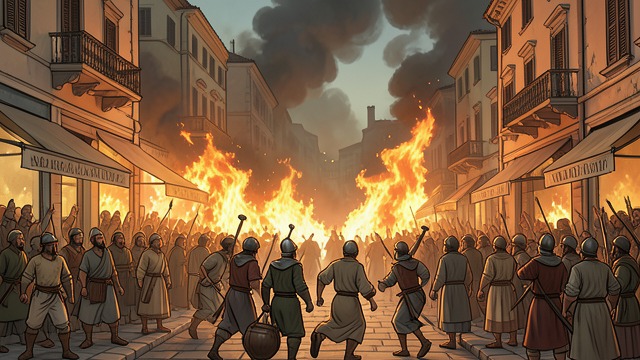
A Disaster with Witnesses
The city burns in public view
Residents see the flames spread across Rome and report people preventing rescue or spreading fire.
Rumor becomes testimony
Accounts multiply because the destruction is so large that no single official explanation can satisfy the public.
The Emperor Returns
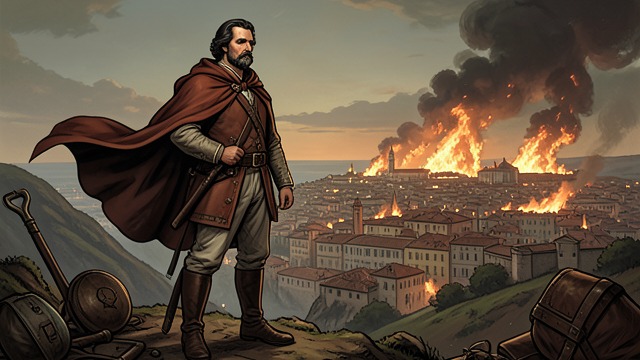
The Emperor Returns
A ruler arrives for spectacle
Nero reaches Rome as the conflagration continues and looks upon the burning city as material for his poetry.
Political danger becomes visible
The crowd’s hostile reaction makes clear that imperial reputation has been gravely damaged.
Promises of Relief
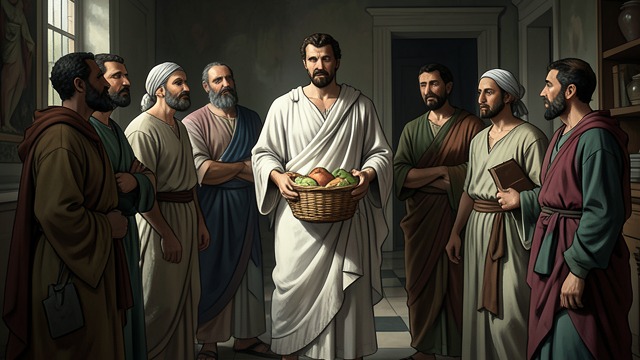
Promises of Relief
Petronius intervenes
He promises food, access to gardens, and games to the angry crowd, temporarily calming the situation.
Relief and propaganda intertwine
The gifts address urgent need while presenting Nero as a benevolent provider.
Christian Scapegoating
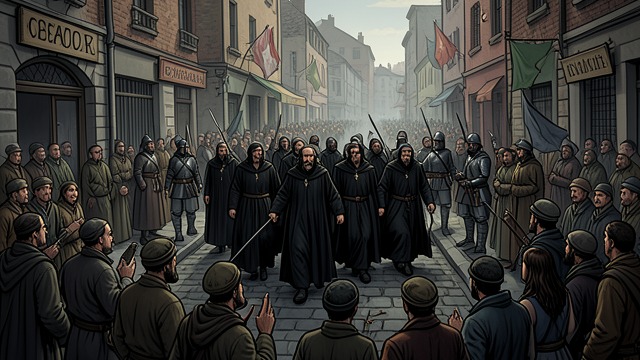
Christian Scapegoating
Suspicion redirected
The court makes Christians the official culprits, despite doubts among people who witnessed the disaster.
New violence compounds the fire
Punishment creates further grief and gives the disaster a lasting moral dimension.
Reconstruction and Memory
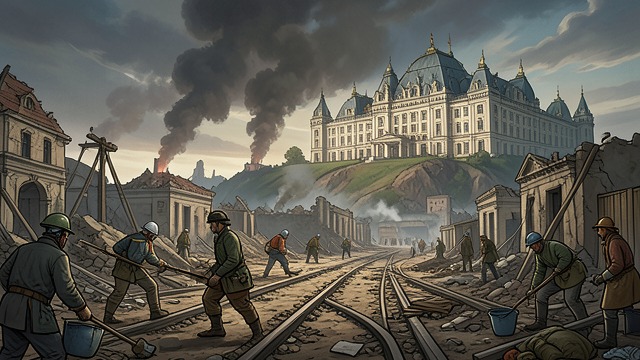
Reconstruction and Memory
New streets rise
Authorities widen streets and rebuild damaged districts, while Nero pursues an immense new palace project.
Trust remains broken
The city’s physical reconstruction cannot erase the public belief that imperial ambition and Christian persecution followed the fire.
During the July fire
Several days into the fire
As unrest threatens the imperial retinue
After the fire’s flames subside
During the rebuilding of Rome
